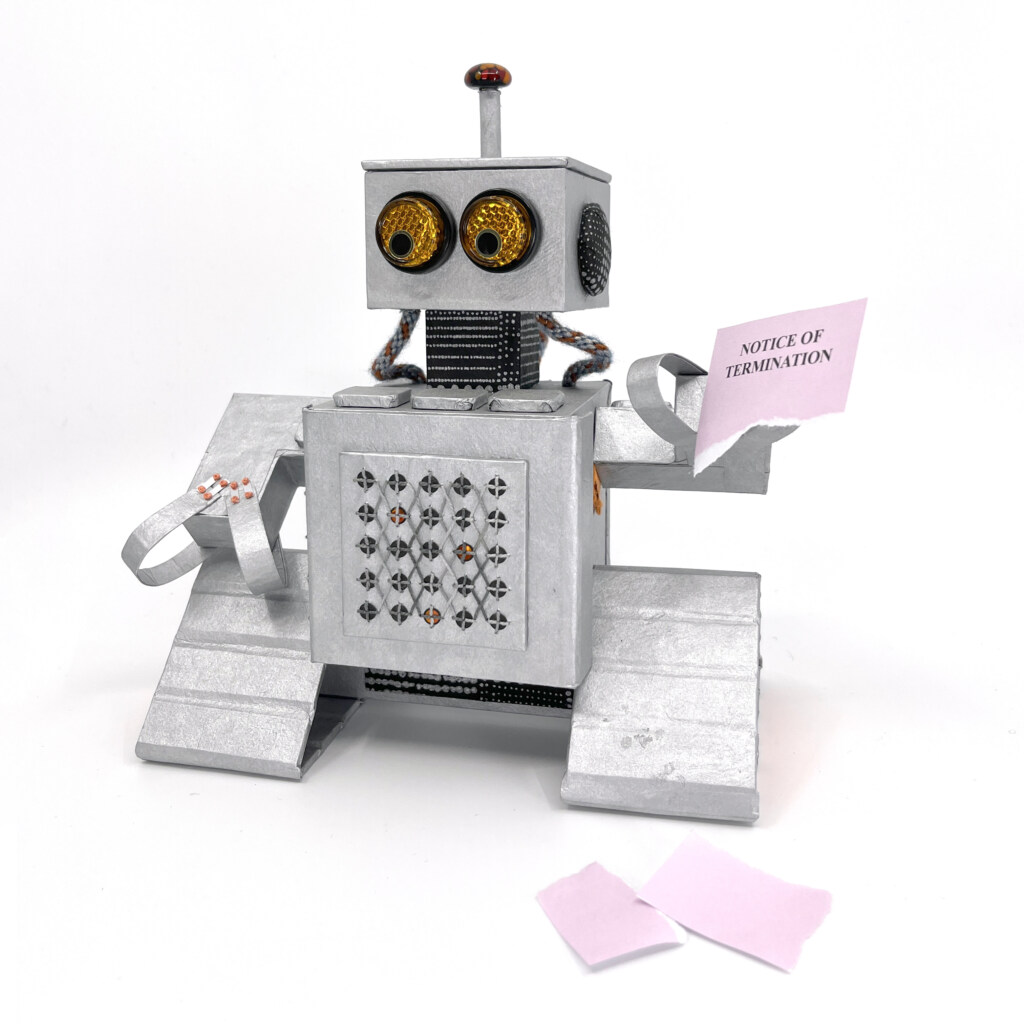
The idea of a robot version of yourself taking over the drudgery of your job while you are playing video games or watching TV is pretty appealing. But can AI really replace an employee? We’re pretty sure the answer is no. At least not yet.
When we talk to other business owners, a common theme we hear is that we all have many creative people we enjoy working with who are doing good work for our business. The problem is that they’re spending a huge amount of their time doing work that they don’t like. Small businesses especially ask employees to wear a lot of hats, and they don’t always love the hats they have to put on. Often, roles like data entry or content creation go unfilled because there isn’t a person to fill them.
These roles can be ideal for an AI “employee”. The simplest solution is to use AI automation to minimize the drudge jobs and help your employees do more of what they like. Using AI to fill the jobs you can’t find a person to do, like entering sales notes or summarizing a project meeting, frees up the rest of your employees to do other higher-value tasks. This means that your company might have fewer employees than a similar firm might have had 20 years ago, and that’s a good thing. AI can let your business “punch above its weight” by allowing those same creative employees you already have do more of the work they are really good at and less of the stuff they hate.
Dustin, the CEO of Modern Logic, shared a great anecdote: So much of the corporate world is people transferring data. One of my first jobs was transferring data from one spreadsheet to another. I automated it and got promoted. If we want to keep our best employees, we don’t want them doing the same spreadsheet operation, or reformatting resumes manually, or generating the same outreach over and over and over again, because that’s a waste of their talents. If we can move them up to more value-generating sections of the business, we can all build a better business together.
Want to learn more? Check out our podcast: Episode #4: Is AI Coming for Your Job?
(art by Becka Rahn)